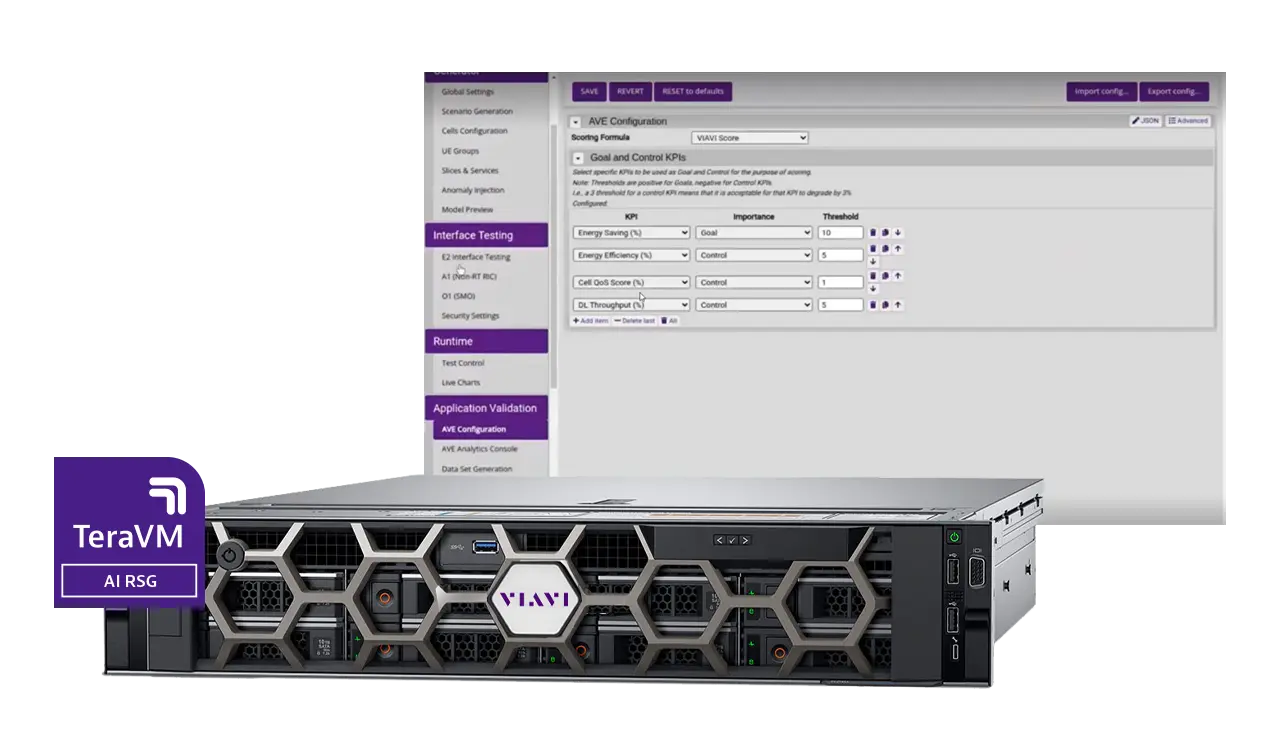
TeraVM AI RSG AI RAN Scenario Generator and RAN Digital Twin Platform
Software-based RAN digital twin that simulates, develops and validates 4G, 5G, 6G and NTN network behavior and xApps/rApps without physical infrastructure.
- Cells
- up to 5,000 cells
- Cells per reference server
- between 1,000 and 5,000 cells per reference server
- UEs
- 10,000 UEs
- Simulation speed
- 100x real-time
Overview
The VIAVI TeraVM AI RSG (AI RAN Scenario Generator) is a software-based RAN digital twin platform. It simulates system-level RAN behavior across 4G, 5G, emerging 6G and non-terrestrial networks, both open and purpose-built, so network behavior and optimization applications can be developed, trained and validated without physical infrastructure.
The platform can emulate a range of topologies and morphologies, configurations, mobility patterns and traffic profiles on real or synthetic maps. Layer 1 radio conditions are modeled and fed into a Layer 2 scheduler, which assigns Physical Resource Blocks based on the Channel Quality Indicator. Traffic demand profiles let UEs switch between idle and active states while using varying amounts of PRBs.
Software ecosystem
AI RSG combines four layers: the AI RSG simulation engine, the Python-based ADK (Application Development Kit), the AVE (App Validation Engine) and an embedded Claude AI assistant for natural-language access. The ADK lets app developers emulate app environments within the AI RSG ecosystem and test applications in closed loop, without integrating with a real NMS or RIC platform. AVE provides KPI scoring, benchmarking and goal-fulfilment analysis, and uses a Graph Neural Network model to predict optimal network configurations as a reference for the app under test. It can also issue pass/fail verdicts for CI pipelines.
Data generation and validation
AI RSG produces RAN-specific datasets for training AI/ML models used in SON, xApps and rApps, and supports benchmarking of RAN Intelligent Controllers in near-real-time and non-real-time scenarios. KPIs for cell, UE, QoS and massive MIMO are provided according to 3GPP and O-RAN Alliance specifications as well as VIAVI proprietary KPIs, and are exported through the supported interfaces to the application or platform under test.
Deployment and integration
The software runs in Docker containers in cloud environments (GCP, Azure, AWS) or on dedicated servers, including air-gapped on-premise installations. Native E2AP, O1 NETCONF and A1 interfaces allow integration with existing SMO, RIC and Grafana infrastructure. The digital twin can be calibrated with live data from field instruments and cell traces.
Key Features
- RAN digital twin simulating system-level RAN behavior for 4G, 5G, emerging 6G and NTN networks
- Open RAN validation: benchmark RICs in near-real-time and non-real-time scenarios
- Generation of RAN-specific datasets for training AI/ML models for SON, rApps and xApps
- Modeling of diverse topologies, scenarios, UE types, mobility models, traffic profiles and GIS maps, with topology import
- Import of real-world maps with streets, buildings and network configurations
- 3D GIS scenarios and 3GPP mMIMO / AODT raytracing
- Configurable UE type, cell type, frequency and traffic profile
- Anomaly emulation, e.g. throughput reduction in specific cells
- Python ADK for RAN control and KPI querying, with seed-based scenario replay
- Simulation at 100x real-time with thousands of parallel scenarios
- App Validation Engine (AVE) with automated KPI scoring, benchmarking and CI pass/fail verdicts
- AI-based AVE using Graph Neural Network modeling to predict optimal network configuration
- Embedded Claude AI assistant for natural-language scenario configuration, ADK code generation and results analysis
- Native E2AP, O1 NETCONF and A1 interfaces with integration into existing SMO, RIC and Grafana infrastructure
- Real-world calibration using live data from field instruments and cell traces
- Cloud-native deployment on GCP, Azure, AWS or air-gapped on-premise
- Kubernetes and container-ready, lightweight container deployment
Specifications
| Cells |
up to 5,000 cells
Datasheet; the web page states up to 100,000 cells
|
|---|---|
| Cells per reference server | between 1,000 and 5,000 cells per reference server |
| UEs |
10,000 UEs
Datasheet also states up to tens of thousands of UEs; the web page states 1 million+ UEs
|
| Simulation speed | 100x real-time |
| Supported networks | 4G, 5G, emerging 6G and NTN networks |
|---|---|
| UE types | Pedestrian, car, bus, drone, indoor etc. |
| Cell types | indoor, urban, rural |
| Interface testing | E2, A1, O1 |
|---|---|
| O-RAN interfaces | E2AP, O1 NETCONF, and A1 |
| Spec compliance | O-RAN WG3 Spec Compliance |
| KPI categories |
Cell, UE, QoS and mMIMO
According to 3GPP specs, O-RAN Alliance specs and VIAVI proprietary KPIs
|
| Deployment | Docker containers with cloud environments or on dedicated servers |
|---|---|
| Cloud compatibility | GCP, Azure, AWS |
| Containerization | Kubernetes and container-ready |
| On-premise | air-gapped on-premise for defence environments |
| Deployment time | under an hour |
Specifications are taken from the manufacturer's documentation. See the datasheet for complete and current values.
Applications
- xApp and rApp development and validation
- RAN Intelligent Controller (RIC) benchmarking
- O-RAN interface compliance testing
- AI/ML model training dataset generation
- SON application testing
- Massive MIMO and beam management optimization
- Energy efficiency optimization
- Non-terrestrial network simulation
- Continuous integration testing of RAN applications
- Autonomous network (L0–L5) validation
- RAN vendor and CSP development labs
- Research and defense environments
Options & Accessories
| Option | Description |
|---|---|
| TVM6235 | AI RSG Single User License |
| TVM6202 | AI RSG Data License (100 Nodes, 300 Cells, 2000 UEs, 200k Reports/s) |
| TVM6203 | AI RSG Advanced RF Model |
Documents & Resources
Related Products
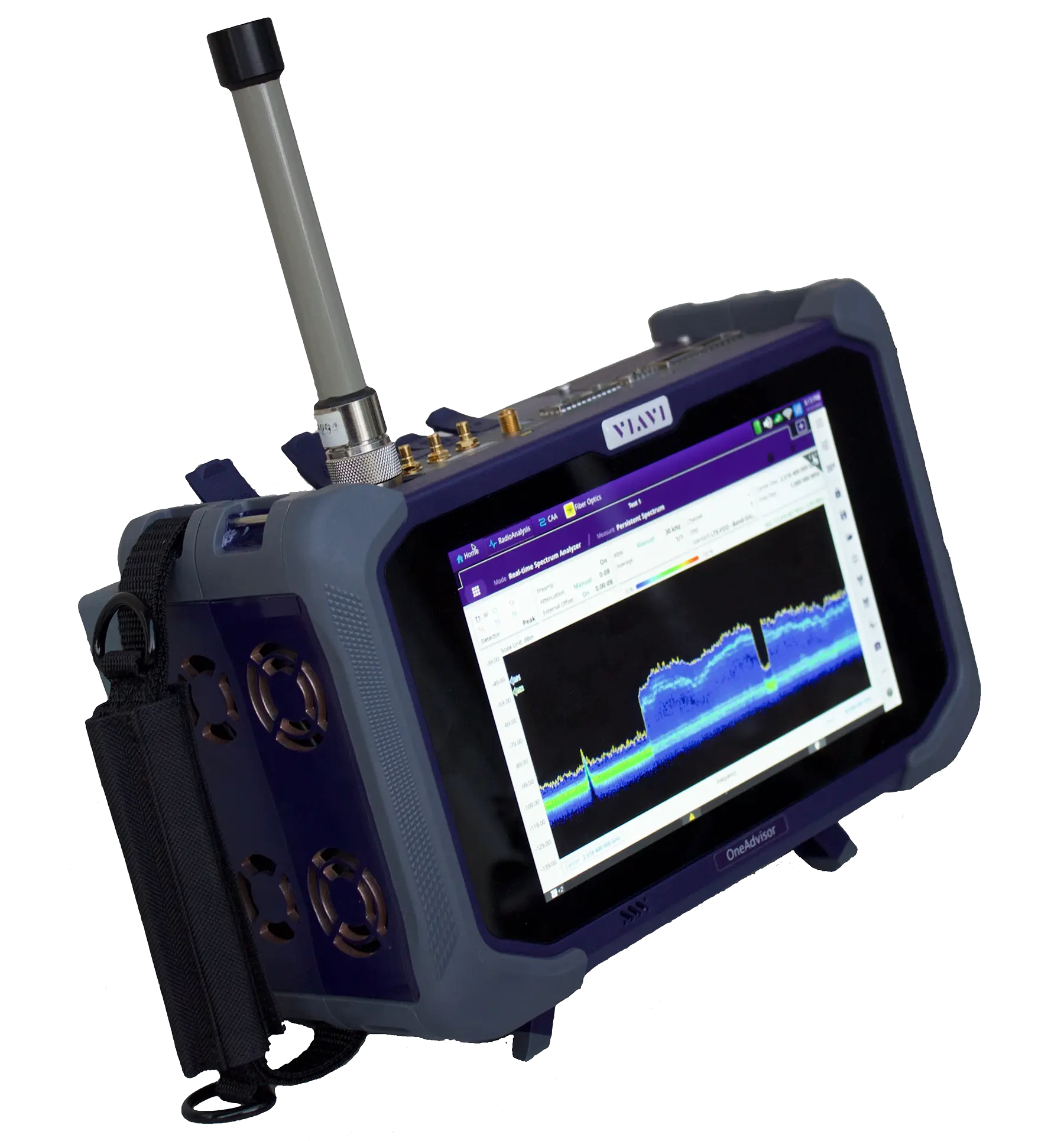
Modular field test platform combining RF spectrum and signal analysis, cable and antenna, fiber and Ethernet transport testing in one portable unit.
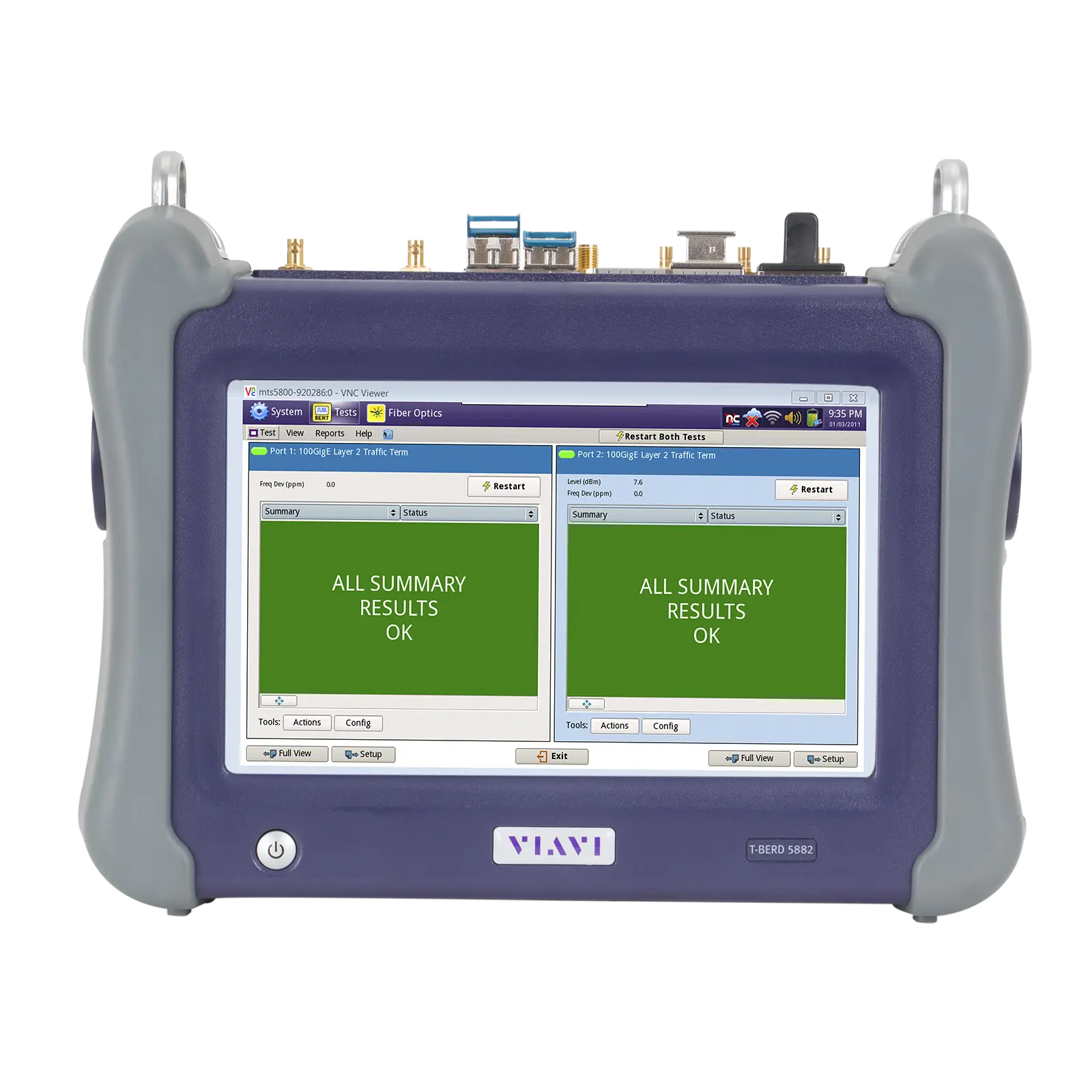
Handheld dual-10G network tester for fiber characterization, service activation, troubleshooting and maintenance of Ethernet, OTN, SONET/SDH and TDM networks.
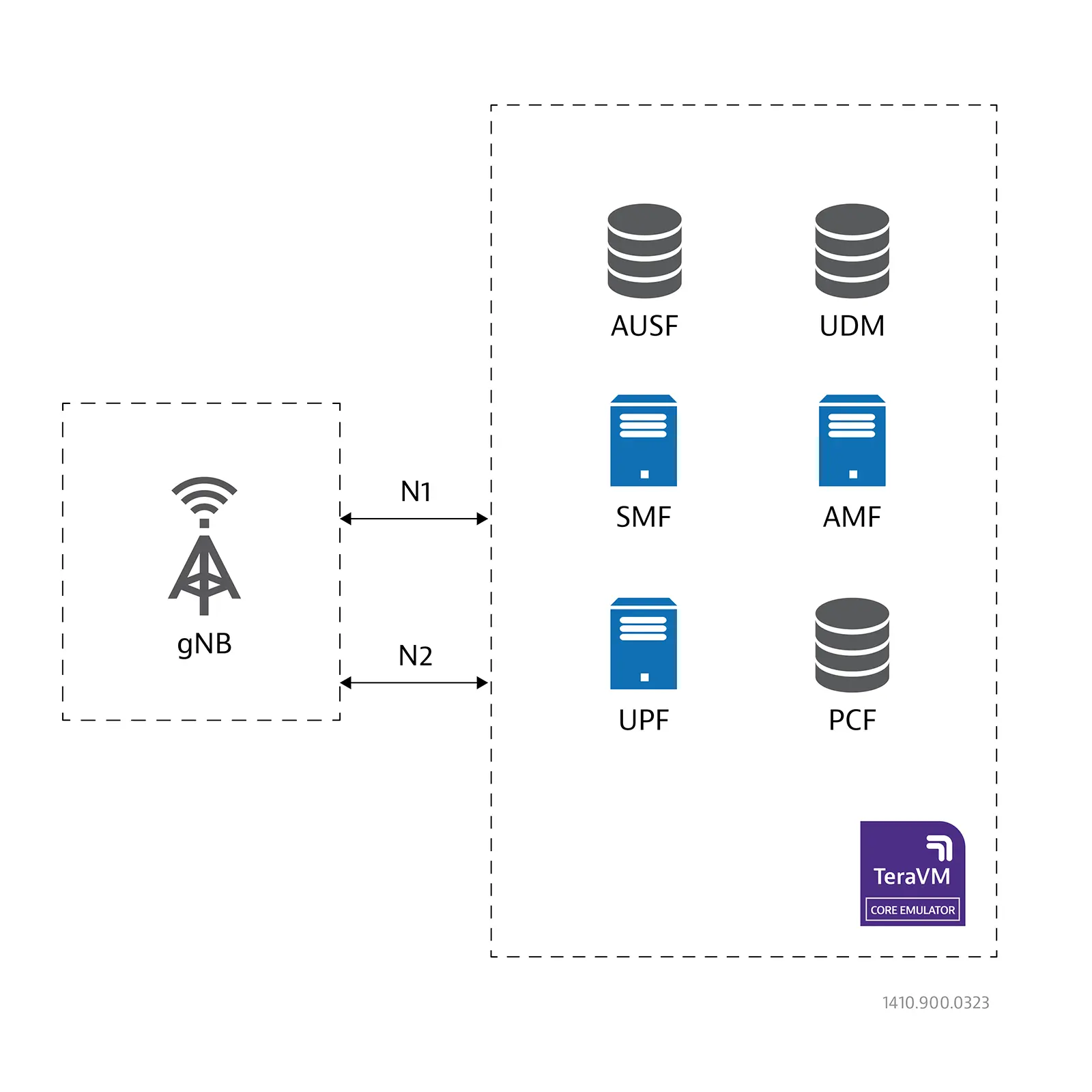
Virtualized 5G core network emulator that works with the TM500 test mobile for wrap-around testing of 5G gNBs in SA and NSA modes.
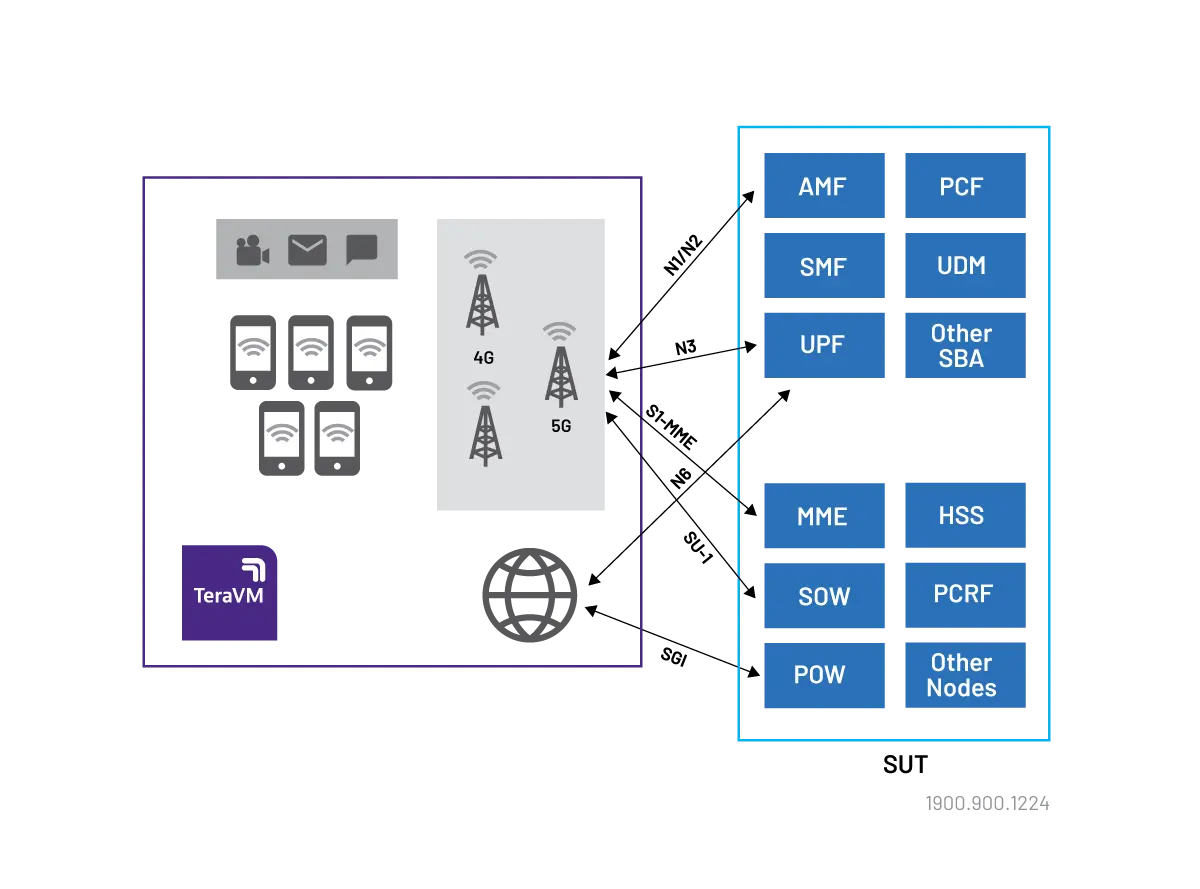
Virtualized test solution that emulates RAN, UEs and applications for full wraparound validation of 5G SA/NSA and 4G/3G/2G core networks.
Software-based O-CU subsystem tester that emulates O-DUs, UEs and core networks over F1, X2/Xn and S1/NG for O-RAN O-CU validation.
Network tester that emulates thousands of mobile devices to test 4G, 5G and Open RAN base stations across the full protocol stack.
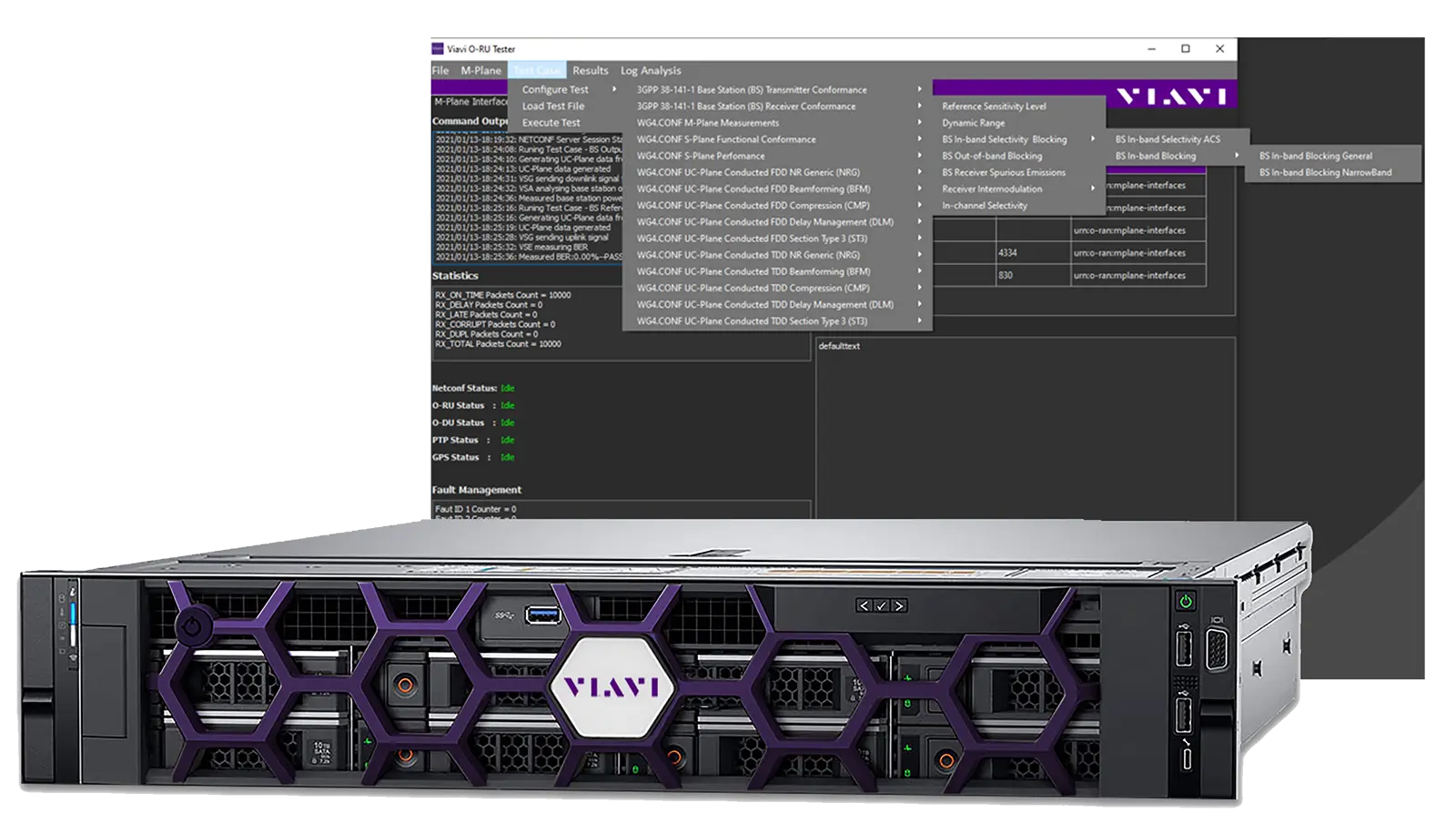
Test system that validates O-RAN Radio Units for conformance, interoperability and performance using an emulated O-DU and Rohde & Schwarz RF instruments.