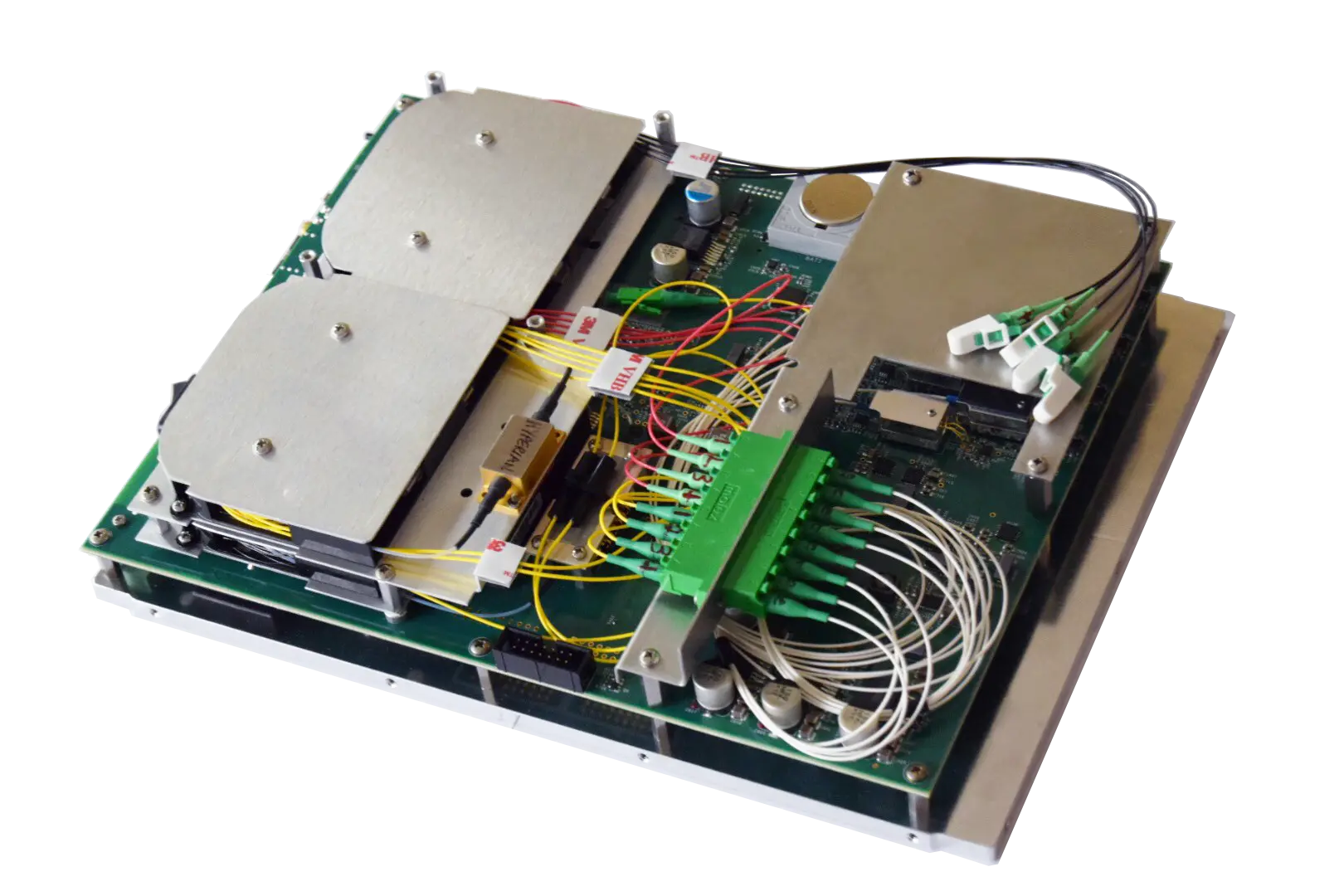
Luna HYPERION Single Board Interrogator OEM Optical Sensing Interrogator
OEM single-board optical sensing interrogator for FBG, LPG, Fabry-Perot and Mach-Zehnder sensors with up to 160 nm wavelength range.
- Measurement options
- Enhanced Visibility, Standard, High Speed (10 Hz, 100 or 1000 Hz, 5000 Hz)
- Number of channels
- 1 through 4 channels
- Wavelength range
- 60, 80, 100 or 160 nm
- Wavelength repeatability/accuracy
- 1 pm
Overview
The HYPERION Single Board Interrogator is an optical sensing instrument designed for integration into OEM systems. It is derived from the HYPERION si155 platform and uses the Micron Optics patented fiber Fabry-Perot filter and wavelength reference technology. Luna has discontinued the product. The HYPERION si155 replaces it.
The board includes a DSP and real-time FPGA processing. These run peak detection algorithms for Fiber Bragg Gratings (FBG), Long Period Gratings (LPG), Fabry-Perot (FP) and Mach-Zehnder (MZ) sensors, and give low-latency access to data for closed-loop feedback applications. Peak and valley detection runs on 1 through 4 parallel channels.
Software
The interrogator works with ENLIGHT Sensing Analysis Software, which provides tools for data acquisition, computation and analysis of optical sensor networks. It also ships with an Application Programming Interface (API) and examples written in LabVIEW, Python, Matlab, C++ and C#. Each data set is calibrated and verified against a permanent NIST traceable reference.
Key Features
- Dynamic and absolute measurement of FBGs, LPGs, FP and MZ sensors
- Up to 16 parallel channels per system
- Data verification key guarantees only valid output; each data set is calibrated and verified against a permanent NIST traceable reference
- Proven reliability and longevity, with over 100 million hours logged since 2000
- Turn-key solution with minimal software or electronic design required for system implementation
- Dynamic measurements from detailed optical spectrum
- ENLIGHT software and API support available at no cost for sensor conditioning, data visualization and data saving definitions
- Deep, continuous dynamic range available to each sensor on each channel, independent of differential system losses
- Flexible peak and valley detection on 1 through 4 parallel channels
- On-board high-performance DSP and real-time FPGA processing
Specifications
| Measurement options | Enhanced Visibility, Standard, High Speed (10 Hz, 100 or 1000 Hz, 5000 Hz) |
|---|---|
| Number of channels |
1 through 4 channels
Web page states 1 or 4 channels per system
|
| Wavelength range |
60, 80, 100 or 160 nm
Web page states up to 160 nm
|
| Wavelength repeatability/accuracy |
1 pm
Repeatability and accuracy per NIST Technical Note 1297, 1994 Edition; assumes an FBG bandwidth of 0.25 nm
|
| Sensor scan rates | Up to 5000 Hz (80 nm scan) |
| Dynamic range / continuous | 17 - 45 dB |
| Full spectrum measurement | Included, data rate at 10 Hz |
| Optical connectors | LC/APC |
| Compatible sensors |
Fiber Bragg Gratings, Long period gratings, Fabry-Perot, Mach-Zehnder Sensors and others
FBG bandwidths of 0.25 nm used for performance qualification
|
| Interface | Ethernet |
|---|---|
| Software | Comprehensive API and example support for LabVIEW, Python, Matlab, C++, C# |
| Weight | 1.8 kg |
|---|---|
| Operating / storage temperature |
Capable of operating temperature range of -20 to 60 degree C
User is responsible for thermal management; platform tested and qualified using a finned heat sink and a convective airflow
|
| Input voltage | 9 - 36 VDC, optional AC/DC converter included (100~240 VAC, 47~63 Hz) |
| Power consumption at 12 V | 30 W typ, 40 max |
Specifications are taken from the manufacturer's documentation. See the datasheet for complete and current values.
Applications
- SHM for civil and geotechnical structures
- SHM for energy systems
- Structural test and model validation
- Process temperature monitoring
- Closed loop feedback applications
- OEM system integration
Documents & Resources
Related Products
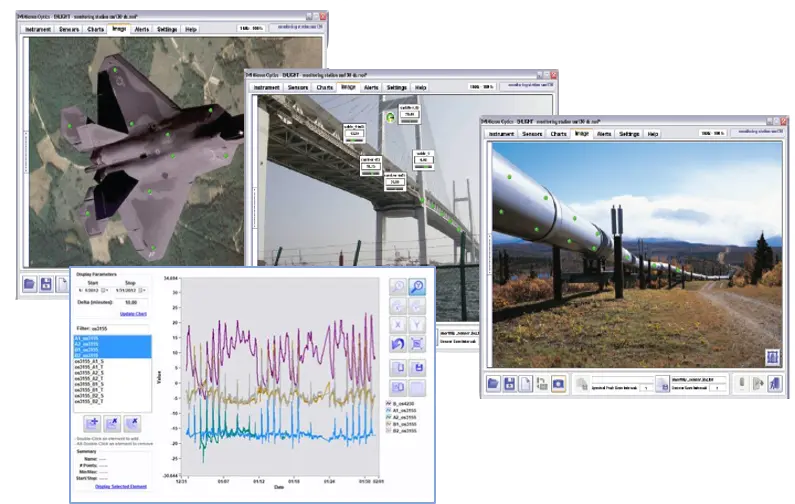
Data acquisition, computation, storage and analysis software for fiber optic sensor networks based on Luna HYPERION interrogators.
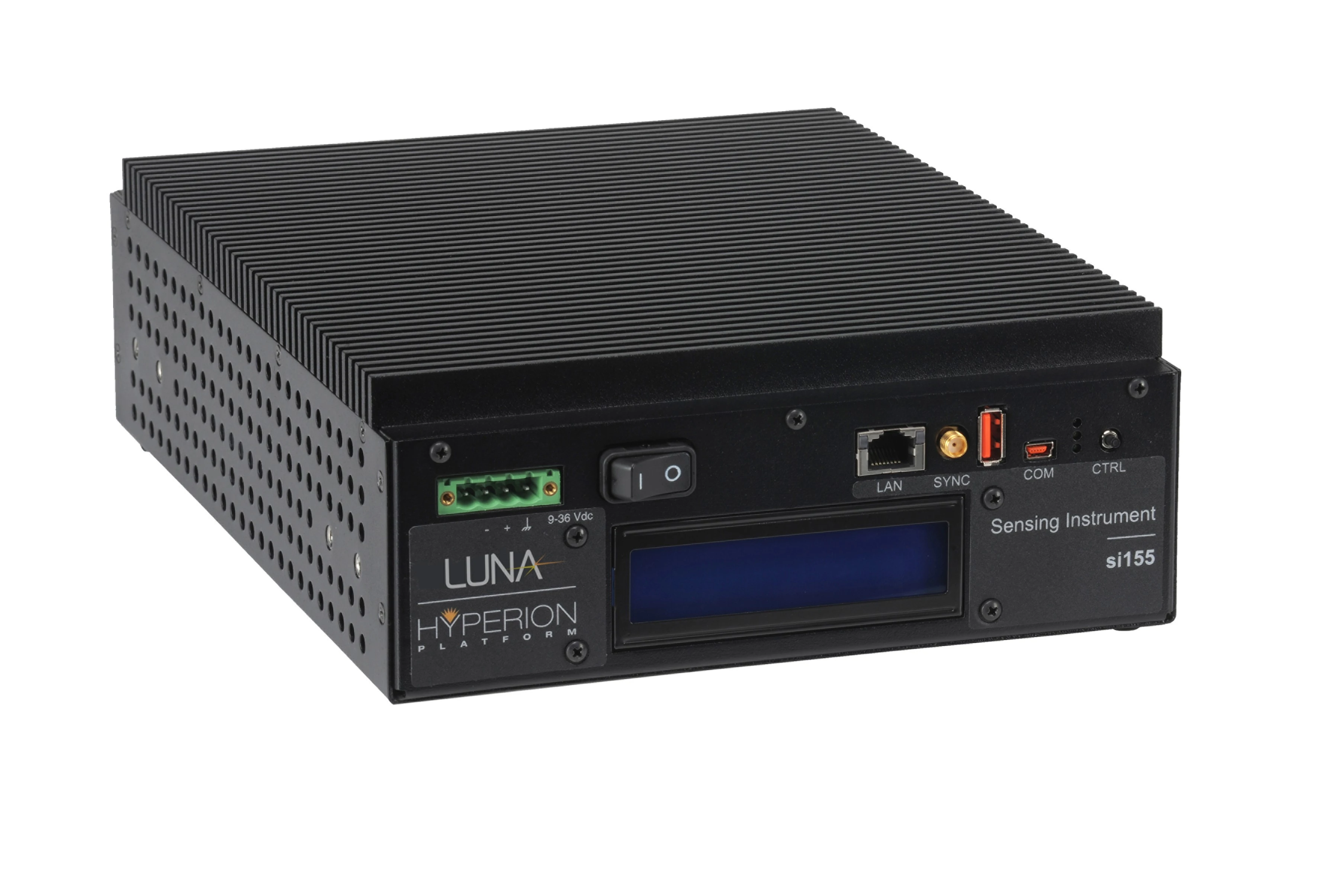
Industrial-grade fan-less optical sensing interrogator with static and dynamic full-spectrum analysis on up to 4 parallel 160 nm wide channels.