VIAVI TestCenter mX3 MX3-25GO-S8 8-Port 25G SFP28 Test Module
Single-speed 8-port SFP28 mX3 test module for 25G Ethernet Layer 2–3 testing in TestCenter chassis.
- Port density
- 8-port SFP28
- Media support
- 25G: 802.3 by 25GBASE-CR, 25GBASE-CRS, 25GBASE-SR; 10G: 10GBASE-SR, 10G Copper DAC
- Auto-negotiation
- Auto-Negotiation and Link Training for 25G
- FEC options
- Clause 74 BASE-R FEC, Clause 91 RS-FEC, and Clause 108 RS-FEC; IEEE 25GBASE CR CL74, CL108, CR-S CL74, SR FEC CL108; 25/50G Consortium 25GBase-R FEC CL74, 25/50G Consortium 25GBase RS-FEC CL91
Overview
VIAVI TestCenter Sub-100G solutions provide Layer 2–3 validation for enterprise, service provider, industrial and data center networks built on sub-100G Ethernet technologies. These networks still rely on sub-100G links for access, aggregation, control-plane and specialized connectivity applications, so they need validation of performance, interoperability, resiliency and long-term operational stability.
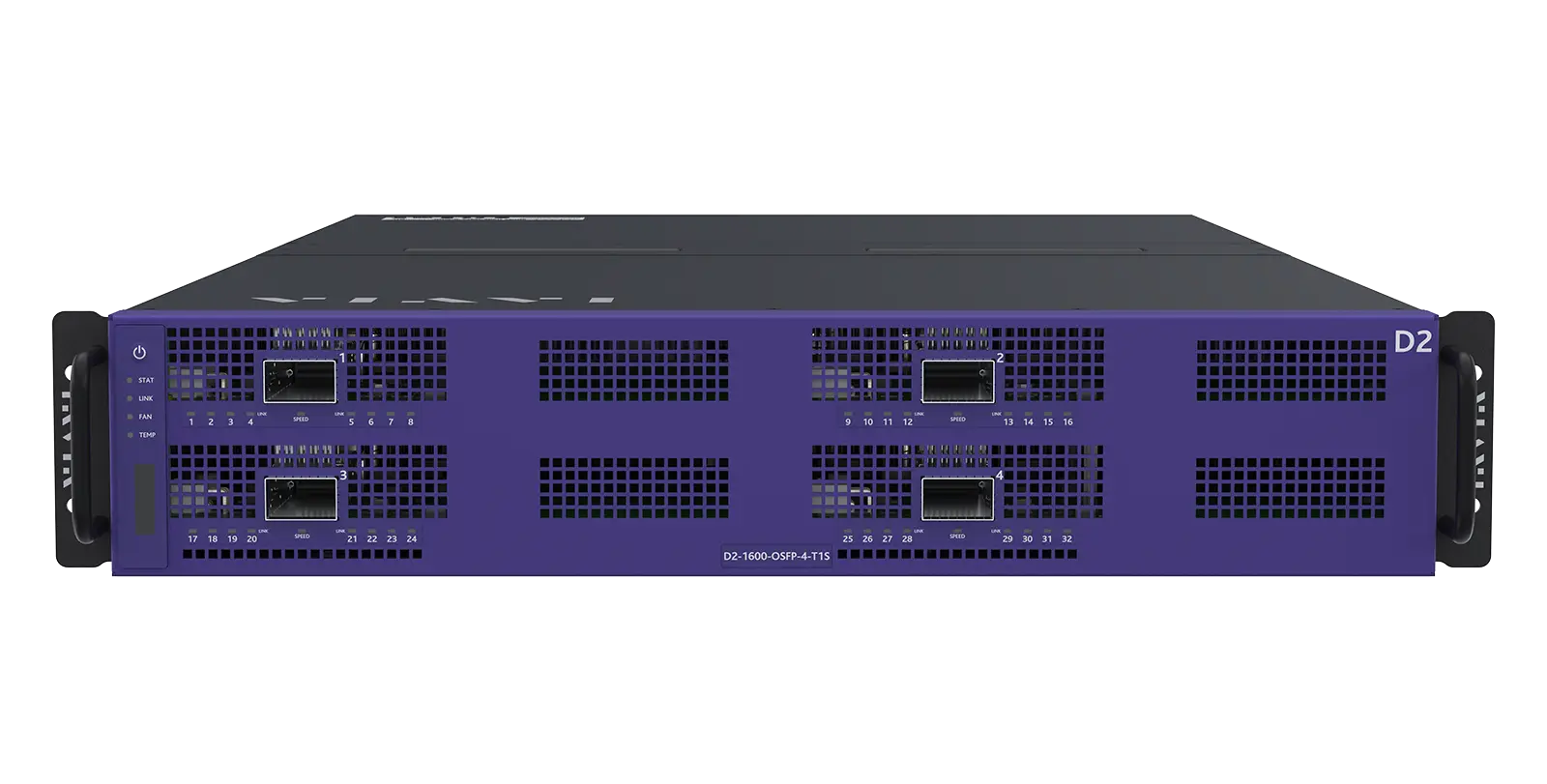
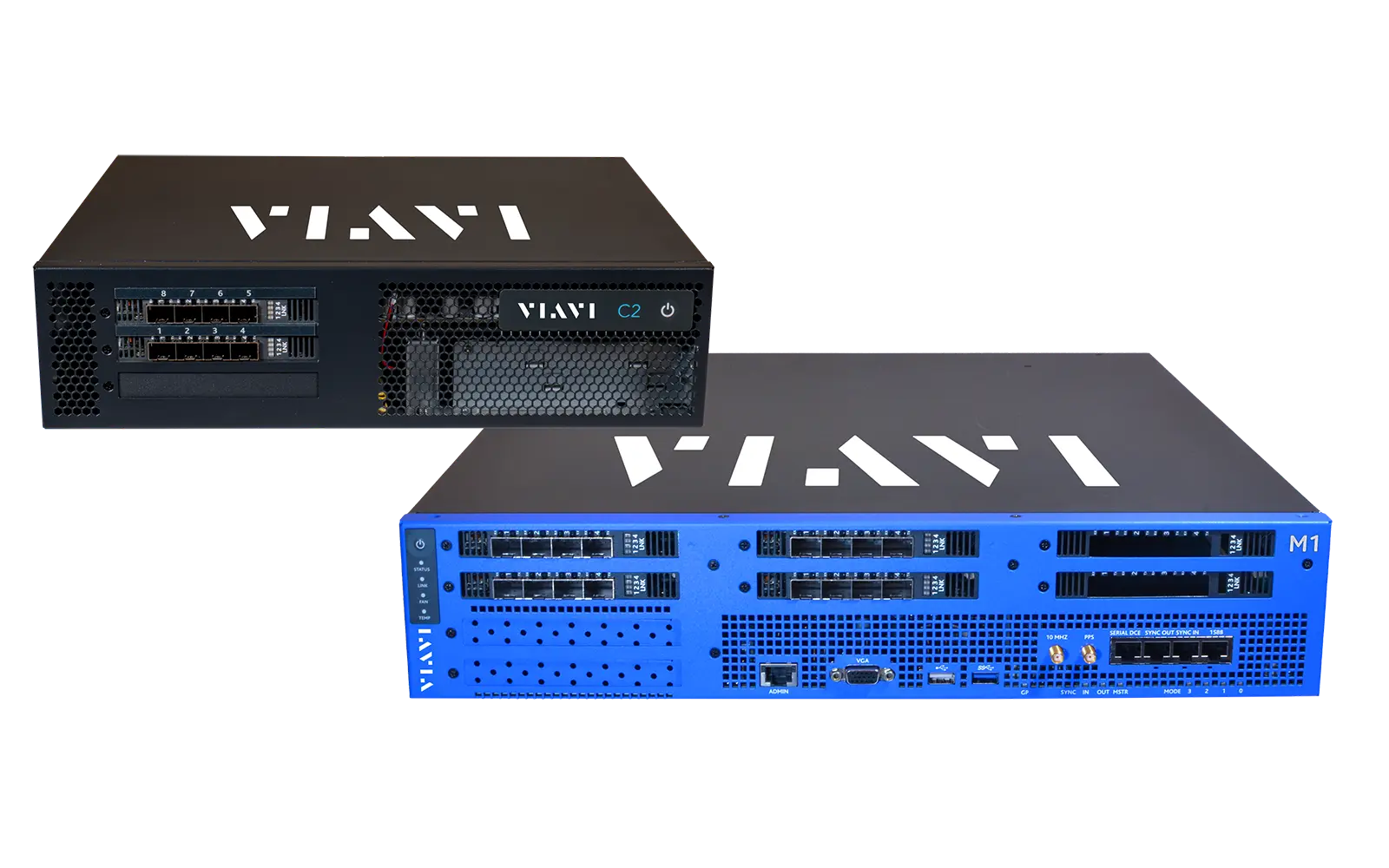
The family comes in two forms. Modular chassis-based systems use fX, dX, mX and pX sub-100G test modules. Compact appliance platforms such as M1 and C2 take a range of NIC configurations. Both allow test configurations to scale across enterprise, service provider and data center infrastructures.
The solutions support functional, performance and interoperability validation. They generate and analyze traffic and measure latency, jitter, throughput and packet loss. They also support regression testing after hardware, software and topology changes, and they integrate with other TestCenter hardware from 10MB to 1.6T and with TestCenter Virtual environments.
Key Features
- High-density Ethernet testing with dX, fX, mX and pX test modules or M1/C2 appliances with a variety of NIC configurations
- Support for regression testing and long-term network lifecycle assurance
- Line-rate traffic generation and analysis across large port counts
- Precise, repeatable measurement of latency, jitter, throughput and packet loss
- Multi-vendor interoperability with standards-aligned network validation
- Unified integration with 10MB to 1.6T hardware and TestCenter Virtual environments
- Single-speed 25G version of the mX3 8-port SFP28 module
- Clause 74 BASE-R FEC, Clause 91 RS-FEC and Clause 108 RS-FEC can be enabled and disabled
- Latency measurement with 2.5ns precision and resolution
Specifications
|
Port density
MX3-25GD-S8, MX3-25GO-S8
|
8-port SFP28 |
|---|---|
|
Media support
MX3-25GD-S8, MX3-25GO-S8
|
25G: 802.3 by 25GBASE-CR, 25GBASE-CRS, 25GBASE-SR; 10G: 10GBASE-SR, 10G Copper DAC
Support varies by module speed mode
|
|
Auto-negotiation
MX3-25GD-S8, MX3-25GO-S8
|
Auto-Negotiation and Link Training for 25G |
|
FEC options
MX3-25GD-S8, MX3-25GO-S8
|
Clause 74 BASE-R FEC, Clause 91 RS-FEC, and Clause 108 RS-FEC; IEEE 25GBASE CR CL74, CL108, CR-S CL74, SR FEC CL108; 25/50G Consortium 25GBase-R FEC CL74, 25/50G Consortium 25GBase RS-FEC CL91 |
|
Protocol CPUs
MX3-25GD-S8, MX3-25GO-S8
|
two, multi-core, Intel Xeon Class CPUs
Per module
|
| Maximum support speed | 25G Only |
| Maximum ports per slot | 8 |
| Maximum ports per SPT-N12U chassis | 96 |
| Maximum ports per SPT-N4U chassis | 16 |
|
User reservation
fX2-1G-S16, MX3-25GD-S8, MX3-25GO-S8
|
Per-port reservation |
|---|---|
|
Histograms
fX2-1G-S16, MX3-25GD-S8, MX3-25GO-S8
|
Port-level histogram modes for latency, jitter, interarrival time, frame length, sequence run length and sequence difference check |
|
Transmit / receive streams per port
MX3-25GD-S8, MX3-25GO-S8
|
TX/ 64K TX and RX/128K for all speeds |
|
VFDs and variable fields
MX3-25GD-S8, MX3-25GO-S8
|
6 VFDs available for each 512 (25G/10G) stream templates; 8 m route insertion table entries 4m in 25G/10G mode |
|
Scheduler mode support
MX3-25GD-S8, MX3-25GO-S8
|
Port Based; Rate Based; Priority Based; Manual Mode |
|
Frame length range and controls
MX3-25GD-S8, MX3-25GO-S8
|
100% line rate for frames of 58-16383 bytes controlled by fixed, increment, decrement, random and IMIX modes |
|
Statistics
MX3-25GD-S8, MX3-25GO-S8
|
Nearly 50 transmit stats per port reported in real time. Includes L1-3 counters and rates and checksum and CRC errors. Over 40 real-time measurements per stream including advanced sequencing, latency, jitter and data integrity |
|
Capture
MX3-25GD-S8, MX3-25GO-S8
|
512 MB per 25G/10G port
Capture software includes sophisticated trigger and filtering controls
|
|
External time sources
fX2-1G-S16, MX3-25GD-S8, MX3-25GO-S8
|
GPS and CDMA-based external time sources are supported; IEEE 1588v2 and NTP packet-based external time sources are supported; TIA/EIA-95B-based external time sources are supported |
|---|---|
|
Line clocking
MX3-25GD-S8, MX3-25GO-S8
|
Stratum-3 rated oscillator is the default time source
Modules get their transmit line clocking and timestamping from the control modules on the SPT-N12U and SPT-N4U
|
|
Frame time stamp resolution
MX3-25GD-S8, MX3-25GO-S8
|
2.5 ns |
|
Inter-module and inter-chassis time synchronization
MX3-25GD-S8, MX3-25GO-S8
|
Ports in the same chassis are locked to the internal timing source. For separate systems: timing chain synchronization with ±20 ns accuracy; synchronized via GPS or CDMA network; using NTP or PTP packet-based approaches
Requires supporting controller version
|
|
Transmit clock adjustment
MX3-25GD-S8, MX3-25GO-S8
|
± 100 PPM in 1 PPM increments for each port or each QSFP28 interface for 25G and 10G |
|
Operating temperature
fX2-1G-S16, MX3-25GD-S8, MX3-25GO-S8
|
15°C - 35°C, 20% - 80% RH (non-condensing) |
|---|
Specifications are taken from the manufacturer's documentation. See the datasheet for complete and current values.
Applications
- Enterprise network validation
- Service provider network validation
- Data center network validation
- Industrial network validation
- Functional, performance and interoperability testing
- Regression testing for hardware, software and topology changes