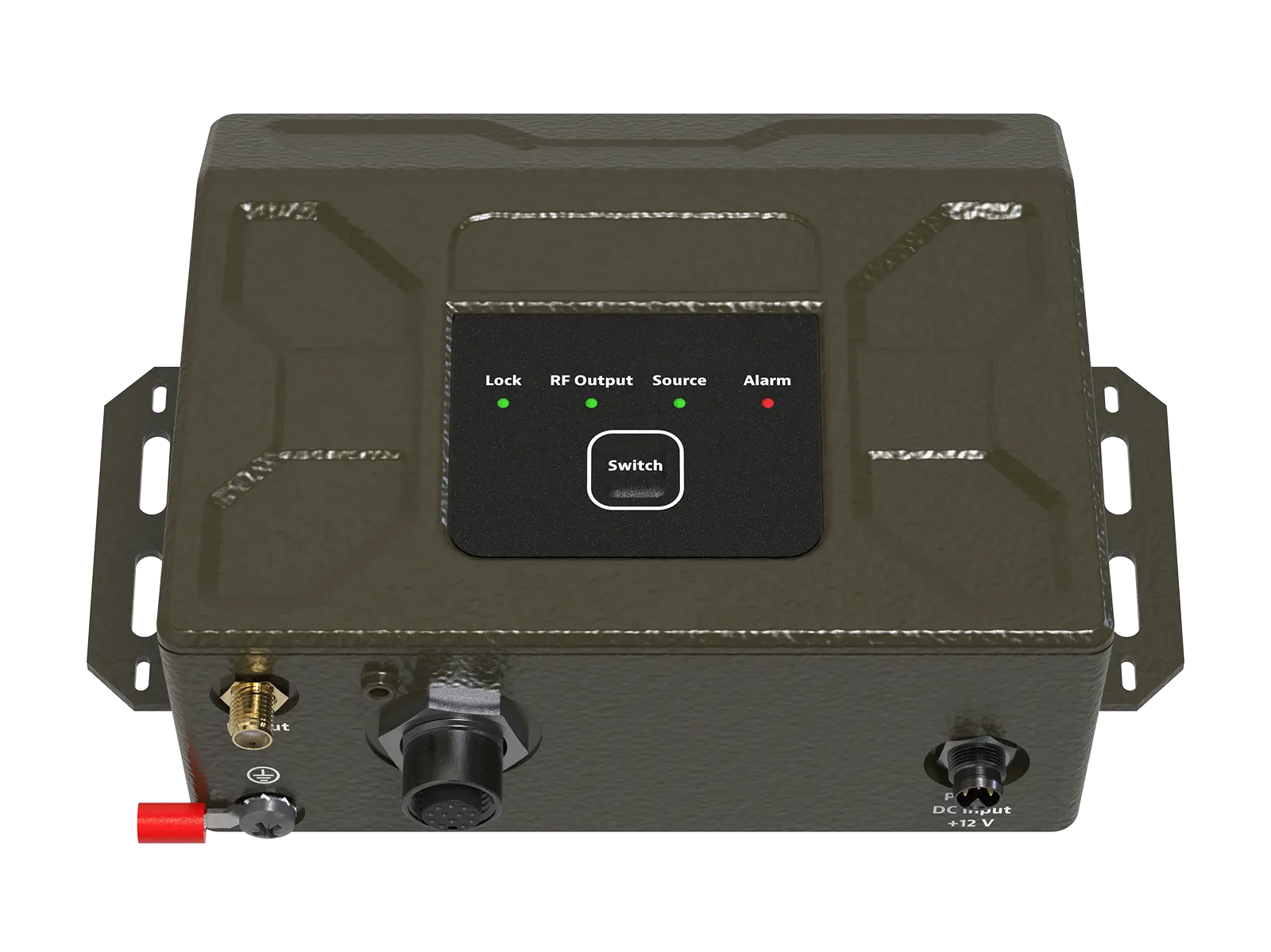
RSR Transcoder 2.0 RSR-T2020 GPS RF Transcoder Module with TCSAC
Board-level RSR Transcoder 2.0 module with TCSAC that converts M-Code, SAASM, INS and NMEA PNT inputs into legacy GPS L1/L2 RF signals.
- Output Frequency
- GPS L1 (1575.42 MHz), L2 (1227.6 MHz)
- Code Type
- GPS L1 C/A, L1 and L2 P-code
- Power Level
- -100 to -120 dBm
- RF Output Connector
- SMA, Female
Overview
The VIAVI RSR Transcoder 2.0 is a rugged, real-time system that converts modern Assured PNT inputs such as M-Code, SAASM, INS and other signals of opportunity into legacy-compatible GPS RF signals. It is intended for personnel who need navigation and timing in GPS/GNSS denied, degraded and disrupted space operational environments (D3SOE), where electronic warfare is used to jam and spoof the Global Positioning System.
Based on a patented methodology, the system includes a full-constellation GPS simulator that outputs standard GPS L1 C/A, L1 P-code and L2 P-code signals. The RSR-T2020 generates a GPS RF signal at configurable power levels that appears to a legacy receiver as a live-sky signal, so legacy systems can be upgraded by replacing the GPS antenna with the Transcoder without modifying internal hardware or software.
The unit accepts NMEA Position, Velocity and Time (PVT) inputs and processes them within milliseconds. This allows real-time conversion of PNT sources such as M-Code, SAASM, SBAS, Galileo, GLONASS and BeiDou into signals compatible with GB-GRAM, MicroGRAM, DAGR and similar receivers. An external 1PPS input enables time-transfer accuracy better than 5 nanoseconds, and BAE Systems (DAGR, MicroGRAM) and u-blox receivers are detected and configured automatically.
Software options
A factory-installed 100 Hz Refresh software option lets the Transcoder 2.0 accept PVT input data at up to 100 Hz over NMEA or SCPI and raise its internal simulation and RF output rate to 100 Hz for airborne, missile and high-speed vehicle platforms. An ICD-GPS-153 Interface software option enables control of ICD-GPS-153-compatible receivers such as the DAGR, including configuration of baud rate, output message set and 1PPS behavior, use of the Time Mark (8504) message as the PNT source, and retrieval of almanac, ephemeris and UTC corrections. GPSCon Controller, JLTerm and SimCon application software are available for download.
Key Features
- Generates GPS L1 C/A, L1 and L2 P-code RF signals compatible with legacy receivers
- Update rates up to 100 Hz
- External 1PPS input enables time-transfer accuracy better than 5 nanoseconds
- Automatic detection and configuration of BAE Systems (DAGR, MicroGRAM) and u-blox receivers
- Designed for vehicle, airborne, and portable deployments
- Supports covert or lights-out operation for tactical scenarios
- Supports ICD-GPS-153 from military user equipment
- Full-constellation GPS simulator based on a patented methodology
- Configurable RF output power level appears to the legacy receiver as a live-sky signal
- Legacy systems upgraded by replacing the GPS antenna, without modifying internal hardware or software
- Accepts NMEA Position, Velocity, and Time (PVT) inputs and processes them within milliseconds
- Converts M-Code, SAASM, SBAS, Galileo, GLONASS, and BeiDou sources into GB-GRAM, MicroGRAM, and DAGR compatible signals
- Background monitoring of RF output power and RF signal quality
- Tested in accordance with MIL-STD-810
Specifications
| Output Frequency | GPS L1 (1575.42 MHz), L2 (1227.6 MHz) |
|---|---|
| Code Type | GPS L1 C/A, L1 and L2 P-code |
| Power Level | -100 to -120 dBm |
| RF Output Connector |
SMA, Female
Output port for transcoded L1 and L2 signals; applies to models with and without enclosure
|
| In-Band Spurious |
< -33 dBc
L1, ±20 MHz
|
|---|---|
| Out-of-Band Spurious | < -80 dBm |
| Harmonics of L1 | < -150 dBm |
| Monitoring Functions | Background monitoring of RF output power and RF signal quality |
|---|
| Input Sources | Any source that outputs NMEA |
|---|---|
| Direct Receiver Control | Direct control of Rockwell Collins GB-GRAM, MicroGRAM SAASM GPS, and u-blox GNSS Receivers |
| PVT Input Update Rate |
up to 100 Hz (NMEA or SCPI)
100 Hz input and RF output refresh requires the Transcoder 2.0 100 Hz Refresh Software Option (22186757-000); standard updates are 1 Hz or 10 Hz
|
| 10 MHz Output Signal Type | CMOS, disciplined by external 10 MHz or 1 PPS reference |
|---|---|
| 1 PPS Output Signal Type | CMOS, disciplined by external 10 MHz or 1 PPS reference |
| 1 PPS Output Accuracy | < 5 ns from external reference |
|
RSR Interface Connector
RSR-T2000, RSR-T2010, RSR-T2020, RSR-T2030
|
20-Pin Connector
Models without enclosure only; carries 1 PPS input/output, RS-232 in/out, 10 MHz buffered output and OCXO lock signals
|
|---|---|
| 1 PPS Input |
CMOS 3.3 V
1 PPS Reference Input from external reference or GNSS
|
| 1 PPS Output |
+3.3 V GPIO
Timing locked to oscillator
|
| RS-232 In |
RS-232 Serial Port RX Interface from external system towards PCBA for UART3
Mutually exclusive with USB-Serial port; connect only RS-232 OR USB Serial Port
|
| RS-232 Out |
RS-232 Serial Port TX Interface from PCBA towards external system for UART3
This port can also be used to update firmware in ISP-Mode
|
| 10 MHz Buffer Output | OCXO: 10 MHz buffered output from internal oscillator |
| OCXO Lock |
CMOS 3.3 V
References Internal Oscillator Lock Status
|
| Power DC Output | 7.5 V – 36 V |
|---|---|
| Power AC Input | 100 V to 240 V |
| Power Consumption |
2.6 W
Typical
|
|
Operating Temperature
RSR-T2000, RSR-T2010, RSR-T2020, RSR-T2030
|
-10°C to 70°C
Without enclosure; tested in accordance with MIL-STD-810
|
|---|---|
| Storage Temperature |
-25°C to +85°C
With or without enclosure
|
| Relative Humidity, Operating | 10% to 90% (non-condensing) at 40°C |
| Relative Humidity, Storage | 10% to 95% (non-condensing) at 40°C |
| Altitude | 0 to 55,000 Ft |
| MTBF | > 20,000 Hours at +40°C |
| Regulatory Standards | CE/UKCA, RoHS/WEEE, REACH, CSA |
|---|---|
| Military Standards | MIL-STD-461, MIL-STD-810 |
| Conducted Emissions | FCC 47 CFR Part 15, section 15.107 (b); RSS-Gen Issue 4 section 8.8; MIL-STD-461 |
| Catalog Number | 22183329-000 |
|---|---|
| Configuration |
Transcoder 2.0 w/TCSAC
Module variant, no enclosure
|
| Weight | 2.30 oz (65.2039 g) |
|---|---|
| Width | 2.554 in (6.49 cm) |
| Depth (board only) | 2.8 in (7.13 cm) |
| Depth (with connectors) | 3.4 in (8.64 cm) |
| Height | 1.03 in (2.61 cm) |
Specifications are taken from the manufacturer's documentation. See the datasheet for complete and current values.
Applications
- GPS/GNSS denied, degraded, and disrupted space operational environments (D3SOE)
- Legacy GPS receiver integration with Assured PNT sources
- Vehicle deployments
- Airborne deployments
- Portable deployments
- Covert or lights-out tactical operation
- Missile and high-speed vehicle platforms
- M-Code, SAASM, and INS/IMU input conversion
Options & Accessories
| Option | Description |
|---|---|
| 22186757-000 | Transcoder 2.0 100 Hz Refresh Software Option – Factory Installed — Enables the Transcoder 2.0 to accept and process PVT input data at up to 100 Hz (NMEA or SCPI) and to generate matching GPS RF outputs at a 100 Hz refresh rate, for airborne, missile, and high-speed vehicle platforms where 1 Hz or 10 Hz updates are insufficient. |
| 22188232-000 | Transcoder 2.0 ICD GPS 153 Software Option – Factory Installed — Enables communication and control of ICD-GPS-153-compatible receivers such as the DAGR: configure baud rate, output message set, and 1PPS behavior; use the Time Mark (8504) message as the PNT source; retrieve live almanac, ephemeris, and UTC corrections with periodic refresh. |
| 22187160 | Transcoder 2.0 Power DIN Mating Cable Assembly — AMPHENOL M8AS-03BFFM-SL7D01 Connector |
| 22187161 | Transcoder 2.0 12-pin DIN Communication Mating Connector — Bulgin PXMBNI12FIM12ASCPG9 Connector |
| 22187162 | Transcoder 2.0 20-Pin Breakout Cable Assembly |
Documents & Resources
Related Products
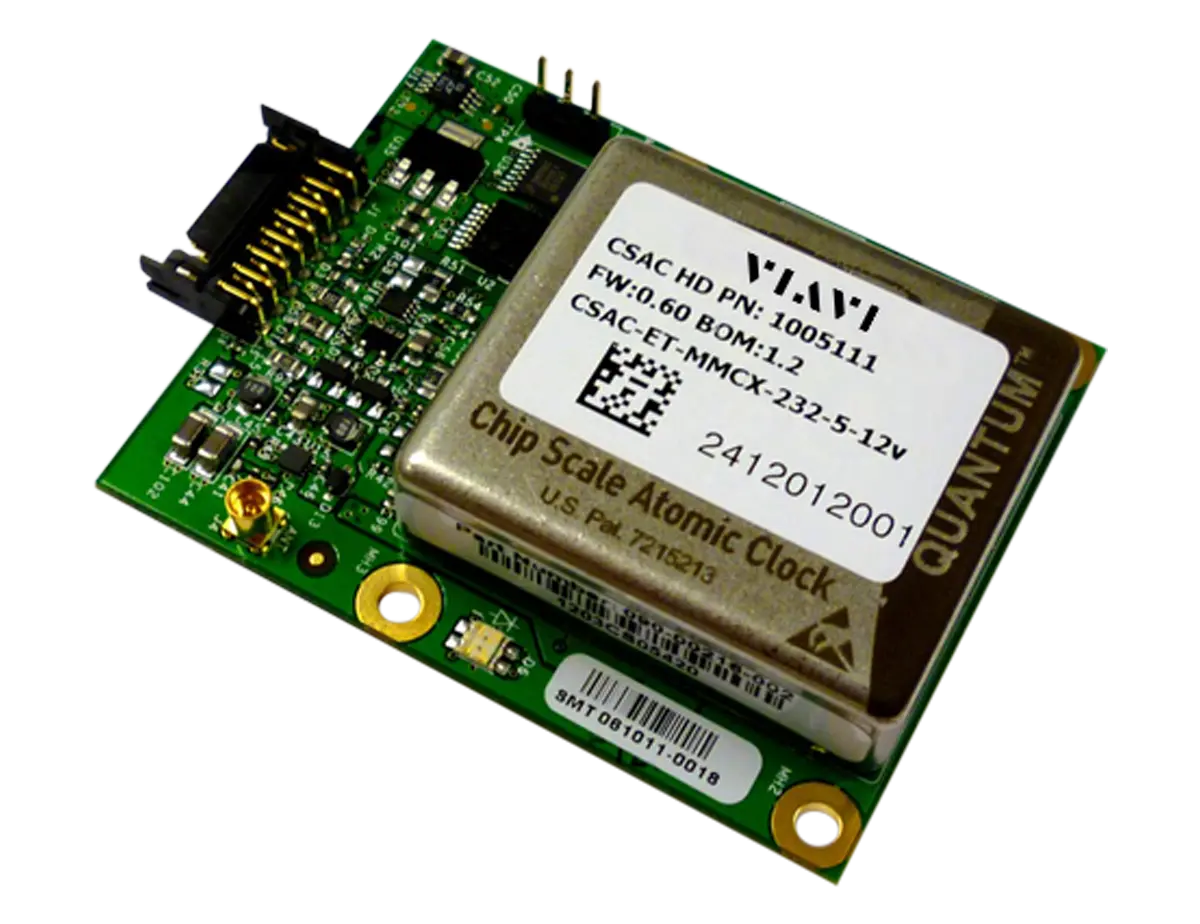
Low-SWaP chip scale atomic clock GPS disciplined oscillator board with 10 MHz and 1 PPS outputs for man-pack, airborne and vehicle use.
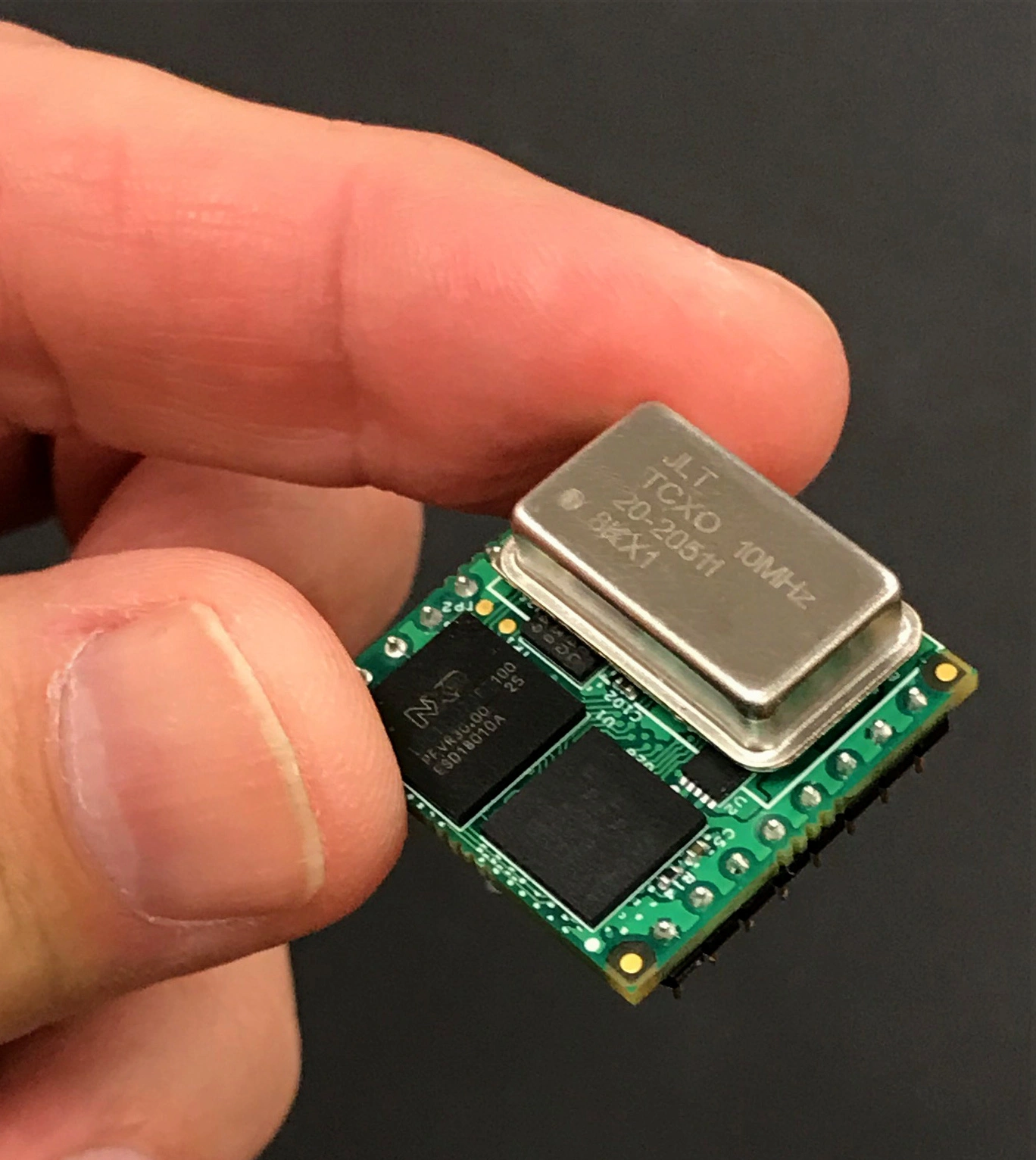
1-inch square 10-channel real-time GPS simulator module that transcodes secure PNT data into a standard GPS L1 RF signal for legacy receivers.
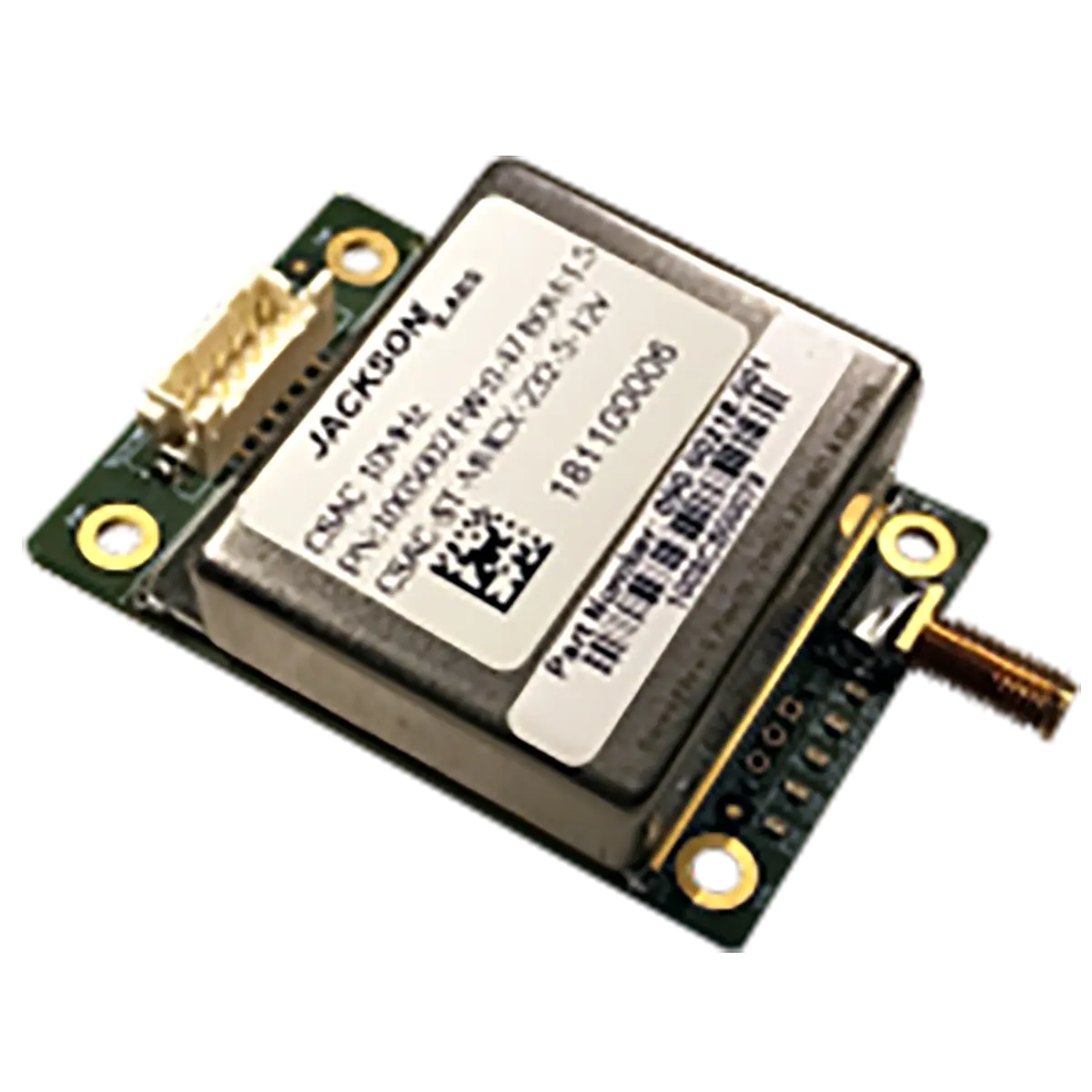
Compact module that converts NMEA/SCPI position, velocity and time data into a real-time L1 GPS RF signal for legacy GPS receivers.