LC-XO Plus GPSDO Kit Low-Cost Desktop GPS-Disciplined 10 MHz and 1 PPS Reference
Low-cost desktop GPS-disciplined oscillator kit that provides 10 MHz, 1 PPS and position-velocity-time information over USB.
- 1 PPS Accuracy
- ±50 ns to UTC RMS (1-Sigma)
- 1 PPS Stability
- typically better than +/-25 ns
- Holdover Stability
- <±50 µs over 3 Hour Period
- 1 PPS Output
- 3.3 VDC CMOS
Overview
The VIAVI LC-XO Plus GPSDO kit is a GPS-disciplined 10 MHz reference that provides 10 MHz, 1 PPS and position-velocity-time information. It has a GPS receiver that can acquire and track up to 50 GPS signals, a low-noise 5 V CMOS 10 MHz output, a 3.3 V CMOS 1 PPS output, a USB control interface, precision voltage references and DACs.
When it is locked to GPS, the unit generates a low-noise 10 MHz signal that typically has better than 1E-10 precision and accuracy (0.1 ppb) and less than 250 fs jitter (20 Hz to 2 MHz). Its 1 PPS signal typically has better than ±25 ns stability.
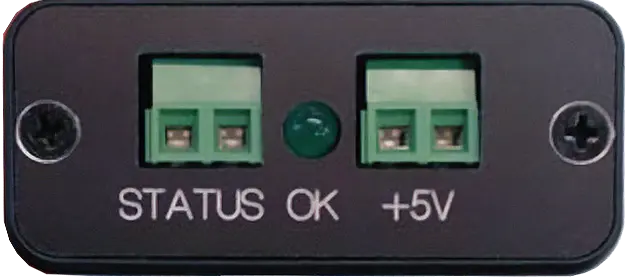
The unit is a small enclosed box. Its power comes from a PC USB port, and it connects to the supplied GPS antenna. It also has a TTL-level status output and can run from an optional 5 V power supply. Control uses SCPI-99 commands over a USB serial port, and the unit provides NMEA output. It works with the GPSCon, SNTP, GPSD and Z38xx software applications, and the firmware can be upgraded in the field.
Key Features
- Complete ready-to-use kit
- 10 MHz and 1 PPS outputs
- Supports NTP
- Compact size and low power consumption
- High-performance GPS receiver that can acquire and route up to 50 GPS signals
- –160 dBm, low-noise 5 V CMOS
- 10 MHz and 3.3 V CMOS 1 PPS output
- USB control interface
- Precision voltage references and DACs
- TTL level status output
- Powered from a PC USB port or an optional 5 V power supply
- Firmware field-upgradable
- Status LED
- Compatible with GPSCon, SNTP, GPSD and Z38xx software applications
- NMEA output
Specifications
| 1 PPS Accuracy |
±50 ns to UTC RMS (1-Sigma)
GPS Locked
|
|---|---|
| 1 PPS Stability |
typically better than +/-25 ns
When locked to GPS
|
| Holdover Stability |
<±50 µs over 3 Hour Period
@+25°C (No Motion)
|
| 1 PPS Output | 3.3 VDC CMOS |
| Serial Control | USB serial port with SCPI-99 commands, GPS NMEA Output |
| ADEV |
10 Ks <5E-012
GPS Locked, 25°C, no motion
|
| TTL Alarm Output | GPS LOCK and Event indicator |
| Warm Up Time/Stabilization Time |
<5 min
at +25°C to 1E-08 Accuracy
|
| GPS Frequency | L1, C/A 1574 MHz |
|---|---|
| GPS Antenna | Active or Passive, 5 V supplied by unit |
| GPS Receiver | 50 Channels, Mobile, SBAS WAAS, EGNOS, MSAS capable |
| Sensitivity, Acquisition | -142 dBm |
| Sensitivity, Tracking | -158 dBm |
| Frequency Output | 10 MHz CMOS 5 Vpp |
|---|---|
| 10 MHz Precision and Accuracy | typically better than 1E-10 (0.1ppb) |
| 10 MHz Jitter |
better than 250 fs
20 Hz to 2 MHz
|
| 10 MHz Retrace |
±2E-08
After 1 Hour @ +25°C
|
| Frequency Stability Over Temperature (without GPS lock) |
±75 parts per billion
from 0°C to +60°C
|
| Output Amplitude | 5 Vpp CMOS |
| Warm Up Time |
<1 min
@ +25°C
|
| 1 Hz offset | -65 dBc/Hz |
|---|---|
| 10 Hz offset | -102 dBc/Hz |
| 100 Hz offset | -132 dBc/Hz |
| 1 kHz offset | -148 dBc/Hz |
| 10 kHz offset | -152 dBc/Hz |
| 100 kHz offset | <-155 dBc/Hz |
| Connections | 1 PPS Output, 10 MHz Output, power, USB, TTL alarm status, antenna input |
|---|---|
| Connector Types | MMCX, Mini-USB, and Screw-In header block |
| Supply Voltage (Vdd) | 5 V via USB connector, or 4 V to 5.25 V on optional header pins |
|---|---|
| Power Consumption | <0.5 W |
| Operating Temperature | -10°C to +65°C |
|---|---|
| Storage Temperature | -45°C to +85°C |
Specifications are taken from the manufacturer's documentation. See the datasheet for complete and current values.
Applications
- 10 MHz frequency reference
- 1 PPS timing reference
- Position-Velocity-Time information
- NTP time serving
Included
- USB cable
- Power supply
- Two MMCX to BNC adaptor cables
- GPS antenna with 10 m length cable
- Z38xx control
- Plotting
- Windows-based command application
- Quick-Start Guide