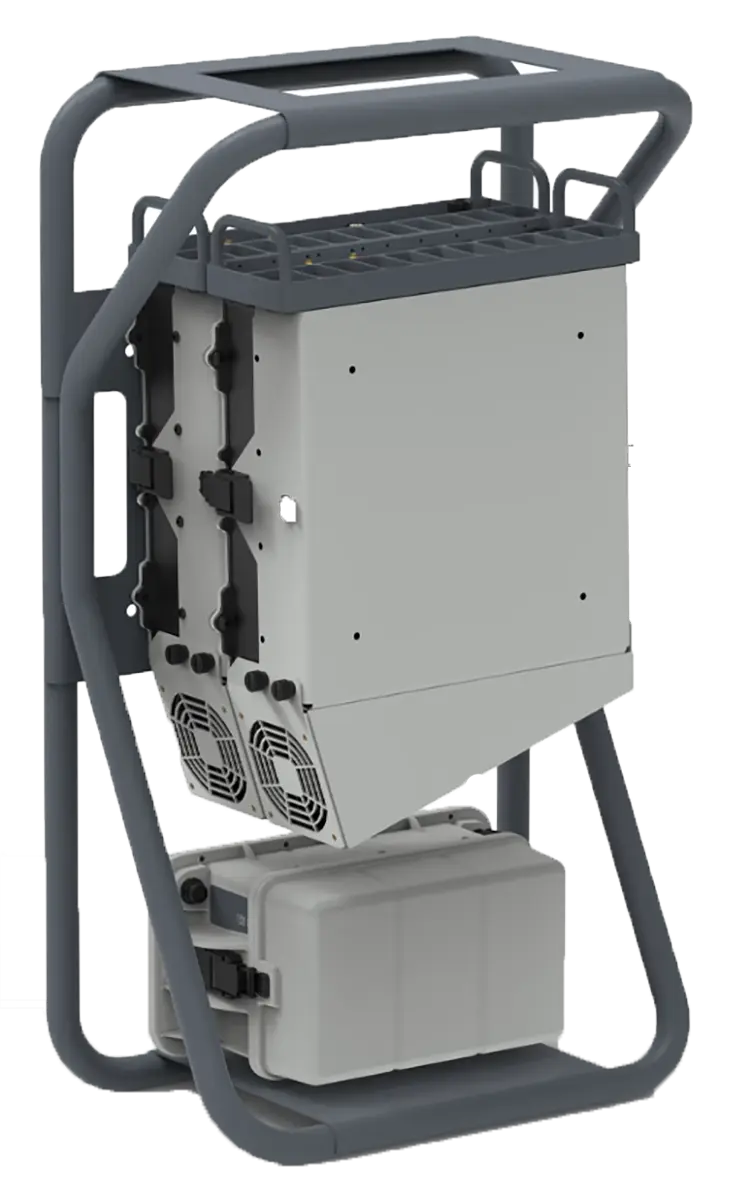
VIAVI T/Rx Software Defined Transceiver System for RF Monitoring, Recording and Transmission
Compact, rugged, all-weather software defined transceiver covering 1 MHz to 18 GHz with two receivers and two transmitters per unit.
- Receivers
- Two independent receivers in each unit
- Transmitters
- Two transmitters in each unit
- Transmit and receive frequency range
- 1 MHz to 18 GHz
- Instantaneous signal bandwidth
- Up to 400 MHz
Overview
The VIAVI T/Rx is a Software Defined Transceiver (SDT) system that monitors, analyzes, records and transmits radio frequency (RF) signals, used to characterize and replicate the electromagnetic spectrum (EMS). It is a compact, rugged, all-weather transmitter/receiver platform that can be installed in a building structure, tower, backpack, vehicle, drone or unmanned remote location.
Its small size, modular design and optional battery power suit both fixed installations and remote operation away from fixed sites. The T/Rx is network-enabled, allowing command and control from any device on the network as well as collaboration between units. The platform combines high-performance RF hardware with substantial processing capability, intended for applications that require high fidelity, accuracy, wide bandwidth and real-time operation.
Integration with Ranger
The T/Rx complements the VIAVI Ranger system as a remote device that extends Ranger transmit, receive and record capabilities to harsh environments and remote locations. Both platforms share the same waveform file format, so recordings and synthetic waveforms created on a Ranger can be transferred over the network to T/Rx units for playback, and recordings collected by T/Rx units can be transferred to Ranger units for analysis. Multiple T/Rx units can be combined to build dynamic simulated EMS environments and large-scale distributed monitoring. Both platforms can be automated with the VIAVI EMS Sequencer software to run transmit and receive scenarios automatically and remotely.
System Integration
The T/Rx is built on the Software Communications Architecture (SCA) 4.1 core operating framework with an open architecture design that supports development, system integration and deployment. This allows T/Rx systems to be integrated into range facilities for ground, airborne, CUAS, naval and cyber-based system validation and verification, with varying antenna requirements, network components and existing infrastructure.
Key Features
- Two independent receivers and two transmitters in each unit
- Transmit and receive frequency range of 1 MHz to 18 GHz
- Up to 400 MHz instantaneous signal bandwidth on each transmitter and receiver
- Each receiver independently programmable in frequency, gain and bandwidth
- Each transmitter independently programmable in frequency, power and signal waveform
- Large waveform storage capacity for full bandwidth recording and playback
- Quick setup and configuration, operational in a matter of minutes
- Compatible with standard universal AC power, vehicle power and battery power
- BB2590 battery operation for extended field use
- Compatible with Ranger Signal WorkShop™ waveform files
- Compatible with Ranger EMS Sequencer (Vignette Planning & Execution) software
- Mobile phone, tablet or PC operation via network connection
- Modular hardware structure for customizable configurations
- Software Communications Architecture (SCA) framework for rapid deployment of new features and applications
- Open modular architecture for integration into various platforms and systems
Specifications
| Receivers | Two independent receivers in each unit |
|---|---|
| Transmitters | Two transmitters in each unit |
| Transmit and receive frequency range | 1 MHz to 18 GHz |
| Instantaneous signal bandwidth |
Up to 400 MHz
On each transmitter and receiver
|
| Power sources | Standard universal AC power, vehicle power, and battery power |
|---|---|
| Battery |
BB2590
For extended field use
|
| Operating framework | Software Communications Architecture (SCA) 4.1 |
|---|---|
| Control | Mobile phone, tablet, or PC operation via network connection |
Applications
- Electromagnetic Environment Characterization and Simulation
- Sensors and Emitters for Test, Validation, and Training Ranges
- Commercial and Public Infrastructure Protection
- Electronic Warfare (EW) - Electronic Support (ES), Electronic Protection (EP), Electronic Attack (EA)
- Signal Intelligence (SIGINT) - Communications Intelligence (COMINT), Electronics Intelligence (ELINT)
- Multi Domain Operations (MDO)
- Customized RF Transmitter/Receiver Applications
Documents & Resources
Related Products

Integrated development environment and SCA 4.1 core framework for developing, testing and integrating software defined radio and embedded systems.
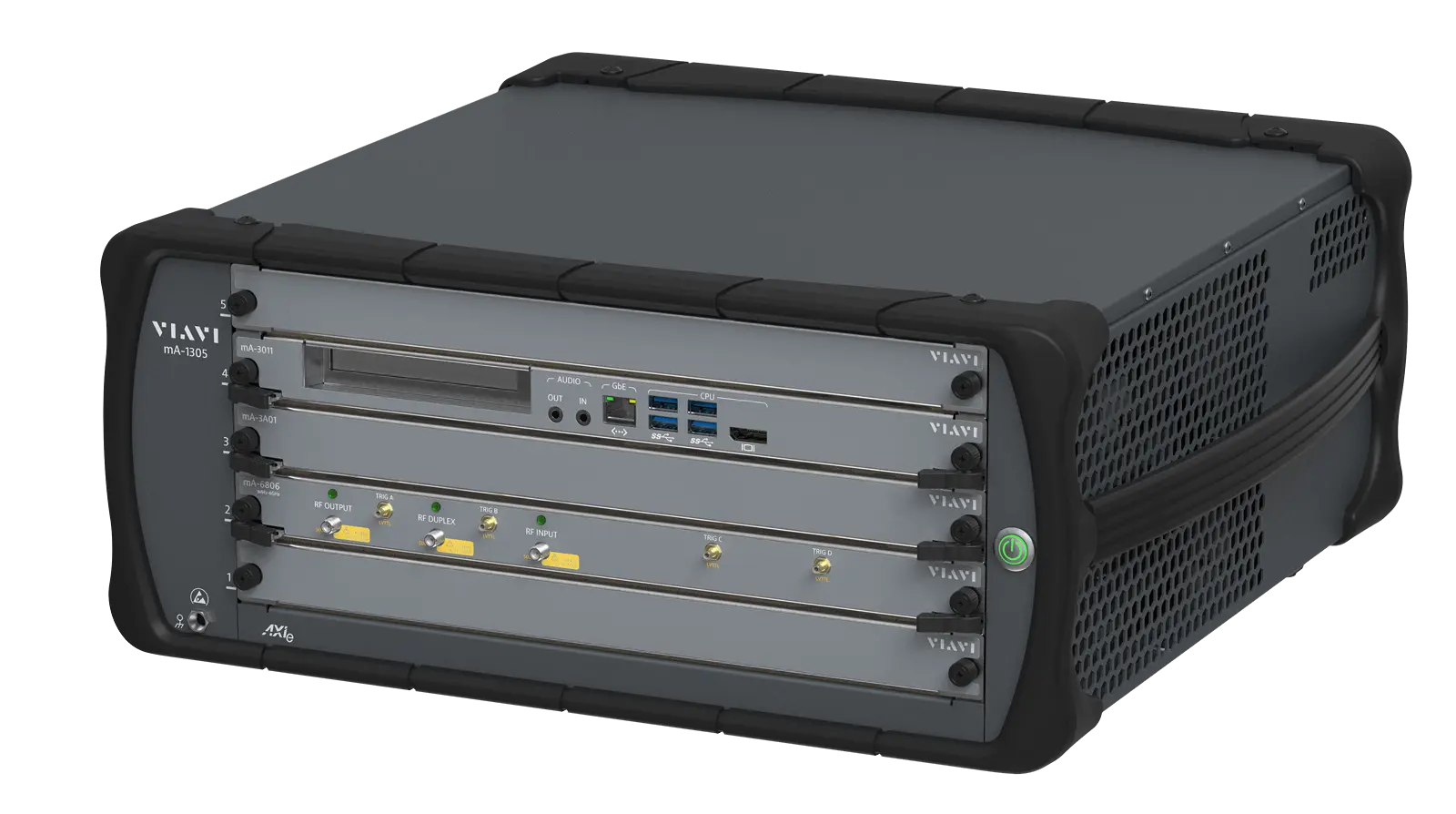
One-box RF record, playback and signal analysis system with up to 200 MHz IBW and long streaming capture from 100 kHz to 6 GHz or 30 GHz.
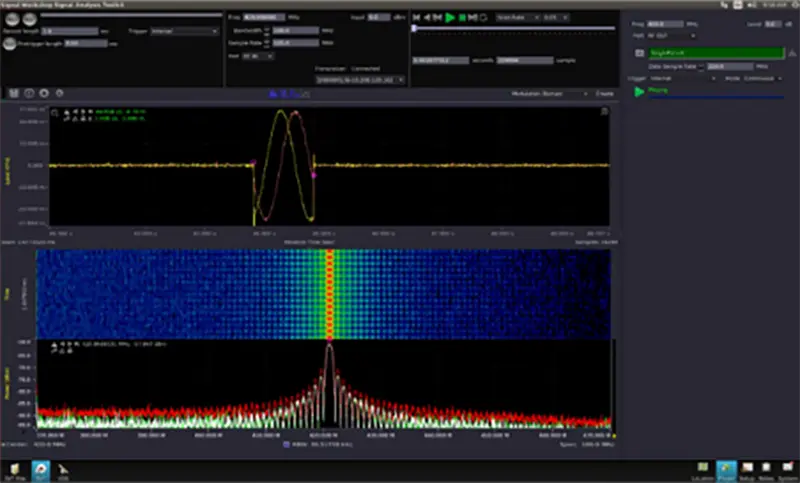
Software suite for RF waveform creation, playback, live signal capture and post-capture analysis with VIAVI CMP hardware.